Hans-Peter Raddatz is a well-known German author and scholar who specializes in Islamic issues. Mr. Raddatz was interviewed last week on Deutschlandradio about the current turmoil in the Middle East. Many thanks to JLH for the translation:
Democracy and Islam — Islam Expert Sees a Combination with Many Question Marks
Hans-Peter Raddatz in a conversation with Jürgen Liminski
Monday, February 28, 2011
Democracy cannot develop from scratch in the Levant, thinks Islam expert Hans-Peter Raddatz. Islamic law, he says, regulates life in its smallest details — so there is no room for democratic development.
| Liminski: | The demonstrations in the region continue and in them are focused, as the sun’s rays by a magnifying glass, the hopes of many people in Egypt, in the Maghreb and beyond that in the entire Near East. There are hopes for freedom and democracy, and the demonstrators are, in the main, people with cellphones, young, internet-wise and cosmopolitan. They are not a representative cross-section of the present population. As always, they demand democracy, in the Islamic countries too, and the great question is: How capable of democracy is Islam? What governmental form corresponds most closely to the conceptions of the Koran or the Islamic tradition? Can there even be a permanent secularization of Islamic states? With these questions, I greet the Islam expert and multiple book author, Hans-Peter Raddatz. Good morning, Mr. Raddatz. | |
| Raddatz: | Good morning, Mr. Liminski. | |
| Liminski: | Mr. Raddatz, the call for democracy is somewhat more muted today than just a few weeks ago, but it is still clearly audible. Can there be, in a country shaped by Islam, like Egypt or Libya, a democracy in accordance with Western ideas? | |
| Raddatz: | 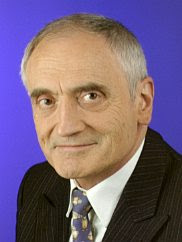 That is the question we have been asking for many years and which has not yet been answered by the so-called inter-religious or inter-cultural dialogue between the West and the Muslims, which has been going on all these years. And to go directly to the core of your question: Islam has no history which would have been able to create democratic structures. That is the question we have been asking for many years and which has not yet been answered by the so-called inter-religious or inter-cultural dialogue between the West and the Muslims, which has been going on all these years. And to go directly to the core of your question: Islam has no history which would have been able to create democratic structures.The revolutionary upheavals we are experiencing today n the whole area are naturally the result of learning, by way of television and other media, that it is different in the West than it is in Islam. This has spoken to the younger generation which is most affected and most open to these Western civil forms. But Islam is based on the Koran and the so-called prophet tradition. This situation yields Islamic law. Islamic law regulates daily life down to the last detail, and there is no room for democratic developments. Until now, when there were parliaments in the Near East, they had been superimposed structures, whose constitution is ultimately in sharia or the Koran. To that extent, talk of democratic developments in Egypt and elsewhere is a political exercise. But they cannot simply develop democracy in the Near East by beginning at the drawing board; it just does not work. |
| Liminski: | Basically, democracy includes sharing of power with an independent judiciary, freedom of the press, right to assemble, pluralism in the parties. Is that not compatible with Islamic concepts? In Egypt, things seem to be going in that direction. | |
| Raddatz: | You have mentioned a very important key word again, that is, control of the judiciary and you have, no doubt involuntarily, introduced the catch-phrase “Muslim Brotherhood” into the conversation. The Muslim Brotherhood is by far the largest and most powerful organization in Islam. It has a social arm for all kinds of activities for women, students, workers and so forth. It also has a crystal-clear arm — the arm of orthodoxy, Islamic orthodoxy, and with that intends to preserve sharia and Islamic orthodoxy. And, especially in Egypt and Saudi Arabia, the Muslim Brotherhood has seized the power in the law, and acquired influence with members of the bar, in the judiciary and so forth. They have completed a march through the institutions. It is only a question of time before the Muslim Brotherhood is sitting in the government in Egypt. | |
| Liminski: | In Islamic countries, Mr. Raddatz, there is the unity of state and religion. Din wa Daula is the term for it. Is secularization such as Europe has gone through possible without destroying the essence of Islam? At first glance, it seems to have worked in Turkey. At any rate, President Erdogan praised the democratic conditions in Turkey yesterday evening in Düsseldorf. | |
| Raddatz: | Yes, well, Mr. Erdogan has recently said all sorts of things publicly that demonstrate the opposite. Not very long ago at all, he called democracy a barbaric form of government, and many other things of that sort. Mr. Erdogan’s comments are fig leaves suited to the needs of the situation. Let us not forget that re-Islamization has also taken place in Turkey. The last twenty years have been shaped by it, And we dare not forget that Mr. Erdogan is the head of an Islamic party. And on the other hand, we must take notice in Europe of a move away from democracy. We need only look at the EU. That EU countries giving up their sovereignty to Brussels, to an unelected tier, is proof enough — aside from the multi-party state structures in the EU states, especially Germany — is by itself proof, that we are not exactly in the act of dissolving. but in a process that seriously gouges at the operating rules of democracy. So, when the talk is of Egypt which is, or is supposed to be, on its way to democracy, then we must also have an eye on our own, politically propagated idea of democracy, which is no longer what the constitution says. The democracy we are living has less and less to do with the requirements which are written down in the constitution. | |
| Liminski: | But we have experienced a secularization in Europe. Is this secularization possible in Islamic lands? | |
| Raddatz: | Excuse me for not having gone into that yet. It connects directly to the question, for secularization means primarily science. Secularization in Europe has been driven by science to the present day. Such a movement cannot, could not and will not be in Islam, because science is diametrically opposed to the Islamic law of the absorption of the individual person through the instructions of the Koran and tradition. That is the main reason why science has languished all this time. It is always said: on the basis of the scientific achievements of the Muslims, that Europe could never have existed without Islam. There were such accomplishments, but they ceased in the 12th or 13th century, while our scientific movement was beginning during the Renaissance. 700 years ago we began a reverse movement, and developed in the way known to all, while in these 700 years, the scientific movement and with it secularization were blocked in Islam So. to that extent, historical development is quite clearly against secularization. If it should take place at all, then it can only happen harmonically, so-to-speak organically — if I may use the somewhat odd expression, not overnight in a test tube. That is out of the question. | |
| Liminski: | Democracy and Islam — a combination with many question marks. Here in German Radio, this has been the Islam expert and multiple author, Hans-Peter Raddatz. Thank you very much Mr. Raddatz. | |
| Raddatz: | Not at all. |

Hat tip: Andy Bostom.


Posting Komentar